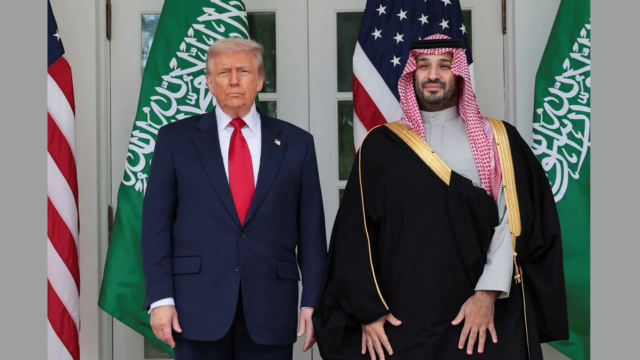
President Trump has made it clear that the United States will not move forward with a civil nuclear agreement with Saudi Arabia unless Saudi Arabia normalises relations with Israel under the Abraham Accords. The condition links two major U.S. foreign policy goals: expanding regional peace agreements and strengthening strategic partnerships in the Middle East.
The Abraham Accords, signed in 2020, led the United Arab Emirates, Bahrain, Morocco, and Sudan to establish or improve ties with Israel. Washington sees Saudi Arabia, the Arab world’s largest economy and home to Islam’s two holiest sites as the most significant country yet to join the process. A Saudi-Israel agreement could reshape regional diplomacy and security.
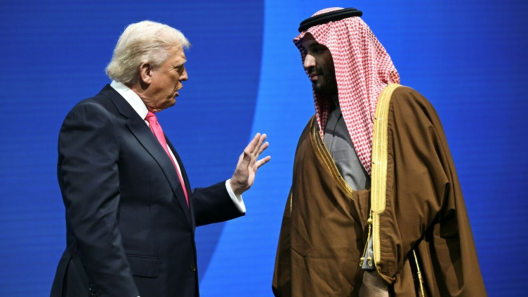
The proposed nuclear deal would support Saudi Arabia’s plans to develop civilian nuclear energy for electricity generation and to reduce its dependence on oil. However, nuclear cooperation is highly sensitive because of concerns that advanced technology could eventually be used for military purposes. Trump has said the deal would be limited to peaceful use and would not allow uranium enrichment.
Saudi Arabia has repeatedly said it will not recognize Israel without meaningful progress toward the creation of an independent Palestinian state. That position remains the biggest obstacle to any agreement. As a result, the future of the U.S.-Saudi nuclear deal now depends as much on diplomacy as it does on energy cooperation.