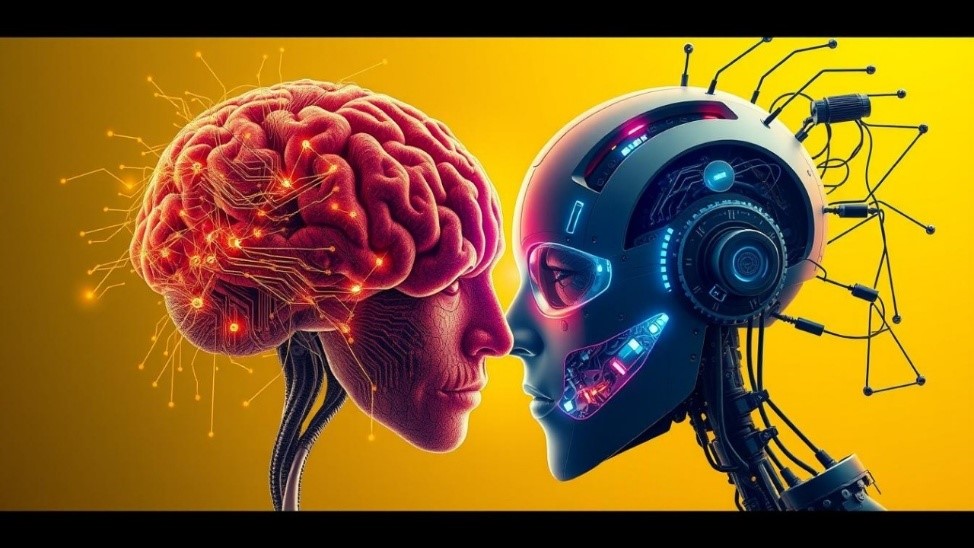
The rise of artificial intelligence has sparked a global conversation about the future of work. While some see a negative future of widespread job loss, a more hopeful perspective is emerging: AI is not a destroyer of jobs, but a catalyst for change. The question is no longer “Will AI take my job?” but “How can I benefit from AI to make my job better?”
Development these days means turning our attention from tasks that can be automated to skills that are uniquely human. AI excels at speed, accuracy, and data processing. Humans excel at creativity, emotional intelligence, and complex problem-solving. The winning strategy is to combine these strengths.

In graphic design, AI tools can generate a logo in seconds. A designer who accepts this technology can quickly create multiple concepts, freeing time to focus on creative and strategic work, understanding a client’s vision, translating emotions into visuals, and crafting an attractive brand story. The role evolves from manual laborer to strategic partner.
The same applies in legal services, where AI can sift through thousands of documents in minutes. This frees paralegals to focus on higher-value work like client interviews, case strategy, and building relationships. A recent report found firms using AI for legal discovery saw a 30% efficiency boost and shifted paralegal roles toward client-facing work.
Even in highly human-centric professions like teaching, AI is making an impact. An AI tutor can give personalized exercises and feedback, allowing teachers to spend more time on one-on-one attention, group projects, and fostering collaboration. The teacher’s role shifts from information dispenser to mentor and facilitator.

To grow in this evolving time, you must adopt a mindset of continuous learning and adaptation, not by becoming tech experts in every field, but by improving skills that are inherently human and hard for machines to replicate:
- Emotional Intelligence: Understanding and managing emotions for leadership, teamwork, and client relations.
- Creative Problem-Solving: Devising new solutions to solve challenges.
- Critical Thinking: Evaluating information, arguments, and making informed decisions.
- Complex Communication: Persuasion, trust-building, and detailed communication.
The future of work is not man versus machine, but a partnership. By welcoming AI as a tool and focusing on the skills it cannot replicate, you cannot only survive the coming changes but succeed in a world that is more efficient, innovative, and ultimately more human.