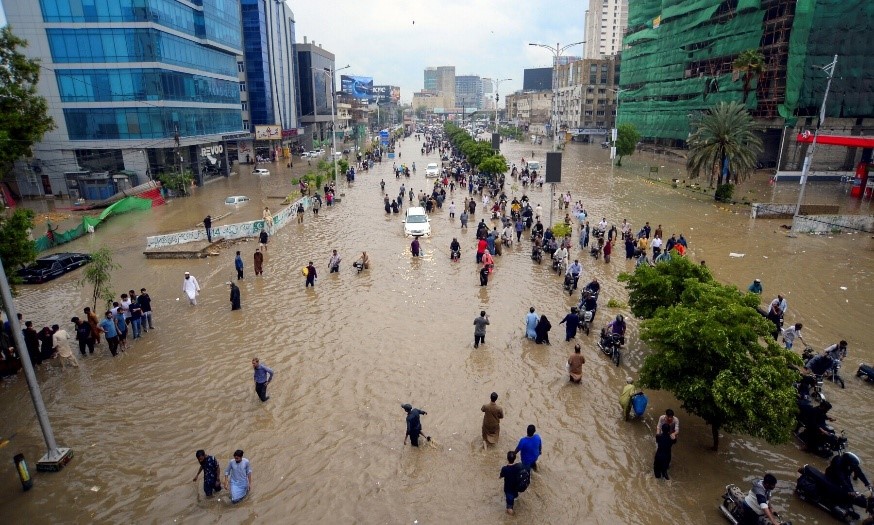
When the clouds opened over Karachi yesterday (19th August 2025), they didn’t just bring rain, they brought chaos. Within an hour, the city went “underwater,” proving once again that Karachi’s systems are not ready for the monsoon season.
Karachi Goes Underwater:
Rainfall levels shattered recent records. In the northeastern part of the city, 178 mm was recorded, the most since that weather station began tracking five years ago. Just around the airport, 163.5 mm of rain fell, the highest since 1979.
Officials admit the city’s drainage can handle just about 40 mm of rain fraction of what fell yesterday. As a result, water filled the streets within hours, turning Karachi’s roads into rivers and leaving thousands of travelers helpless.
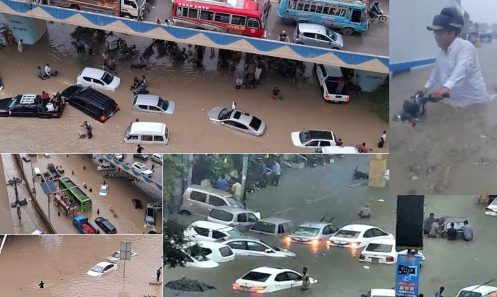
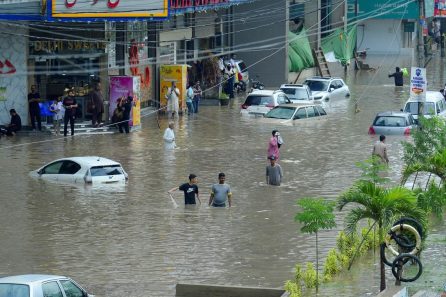
Neighborhoods across the city suffered severe flooding. Gulshan-e-Hadeed, Malir, Nazimabad, Korangi, Liaquatabad, Shah Faisal Colony, Baldia Town, North Karachi, and parts of Clifton and DHA were among the worst hits. Cars were left abandoned in waist-deep water, homes filled with rainwater, and underpasses disappeared beneath the flood. On main roads such as SharaeFaisal, University Road, II Chundrigar Road, Nagan Chowrangi, and Hub River Road, traffic came to a complete halt. Parents waited anxiously as many children were unable to return from school. In some cases, journeys that usually take minutes stretched into seven-hour ordeals.
The human toll was tragic
At least ten people lost their lives yesterday. Wall collapses in Gulistan-e-Jauhar and Orangi Town killed entire family members, including young children. Electrocutions claimed lives in Defence and near Nursery on Sharea Faisal, where rainwater touched exposed wires. Drownings were also reported in drains near Guru Mandir. These deaths highlight how dangerous monsoon rain can be when basic urban safety is neglected.
Beyond the direct loss of life, services across the city broke down. Electricity was cut off in several areas, and repair crews struggled to reach damaged grids due to flooded streets. Mobile and internet networks collapsed, leaving people unable to contact their families. At Jinnah International Airport, flight operations were suspended, with more than a dozen departures delayed or canceled. Both domestic and international travelers were left stranded.
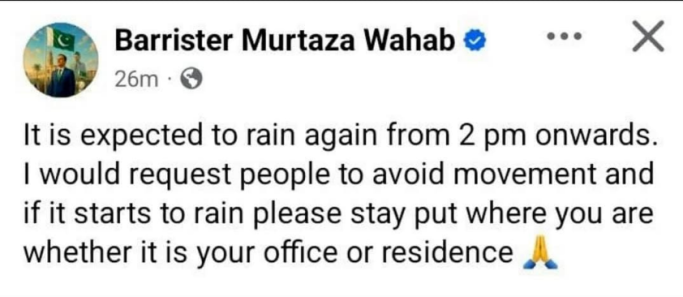
The Sindh government quickly activated emergency protocols, dispatching civic teams to clear drains and pump water out of main roads. But even as rescue efforts continued, the Pakistan Meteorological Department warned that more heavy rainfall is expected in the coming days. Residents were advised to stay indoors and avoid unnecessary travel.
What happened yesterday is not simply a story of rain. It is a story of systemic failure. Karachi, a city of over 20 million people, remains unable to cope with seasonal monsoons because its infrastructure has not been upgraded for decades. Drains are clogged, roads are poorly planned, and rapid urban expansion has left no space for water to flow.
If Karachi is to survive the increasingly extreme monsoons brought by climate change, it needs more than quick fixes and emergency holidays. It needs resilient infrastructure, better urban planning, and serious investment in drainage and safety systems. Otherwise, each year’s rain will continue to bring the same chaos, turning routine monsoons into human disasters.