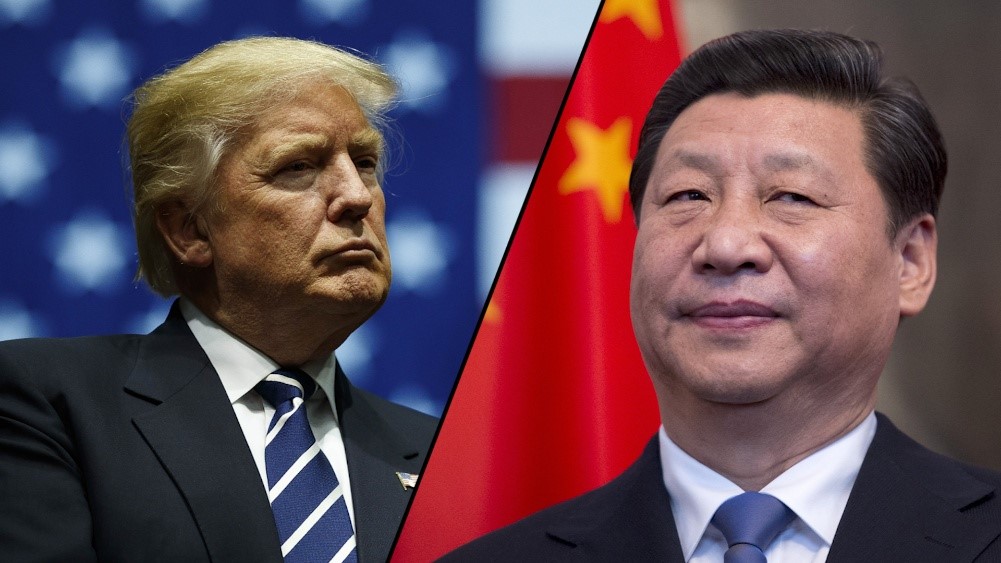
The competition between China and the United States is no longer limited to closed-door summit meetings or diplomatic rhetoric. It’s a contest that’s actively transforming global economics, technology, and global stability — with consequences that influence our daily lives in ways we mostly take for granted.
Disrupting the Global Supply Chain
Among the most apparent effects of this strategic competition is playing out along worldwide supply chains. The U.S. government’s limitations on exports of advanced semiconductors to China — aimed at companies like Huawei and restricting access to chips from companies like NVIDIA — are compelling companies to rethink production plans. This economic “decoupling” has forced firms to diversify suppliers, shift production factories, and absorb higher costs, thus influencing the price and availability of consumer products globally.
Developing countries are most at risk. Most of them are forced to take sides either with Washington or Beijing, frequently sacrificing their own economic sovereignty in the process. Taking sides in this global game of geopolitics can undermine trade ties, investment, and domestic political stability.
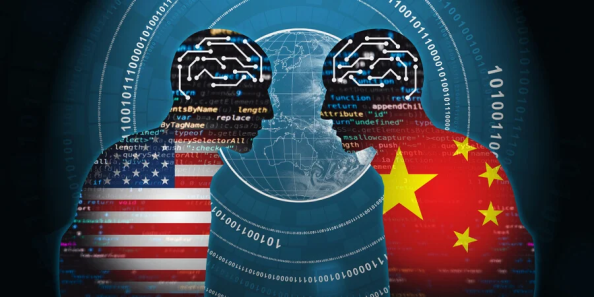
The AI Arms Race
Aside from trade, the two nations are engaged in a technological arms race based on Artificial Intelligence and quantum computing. Both nations are heavily investing in these areas, given their potential to transform them — not only economically, but also for national security and military dominance.
This race is not without danger. The rush to create autonomous weapons platforms and AI-powered surveillance tools has raised international concerns over the decline of human control, the possibility of cyber war, and the moral implications of machine-enabled decision-making in the battlefield. A mistake in this domain could trigger escalation far more perilous than conventional war.
A Fragmenting Global Order
This mounting competition is remapping diplomatic boundaries worldwide. Countries are being pushed more to opt for U.S. or Chinese economic and security alignments. The outcome is a more fractured world order, where multilateral cooperation becomes harder — especially on topics that require unity, such as climate change, global health, and cybersecurity.
For example, the Belt and Road and the U.S.-initiated Indo-Pacific Strategy are not only examples of infrastructure investments or regional development, but strategic attempts to gain influence. The threat of miscalculation in disputed regions such as Taiwan or the South China Sea further increases the instability of today’s world.
Why It Matters
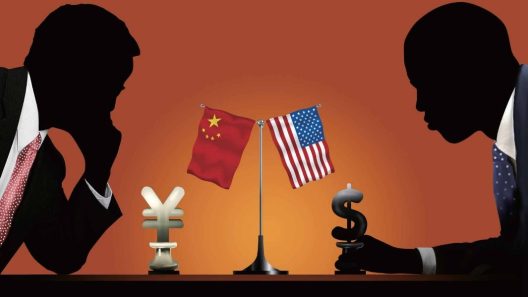
The US-China competition is no far-off geopolitical drama; it is an actual, ongoing contest that involves almost every facet of contemporary living. From the price of phones to the morality of artificial intelligence, from vaccine diplomacy to the destiny of global alliances, the ripple effects are everywhere.
It is important to understand these dynamics. As this great-power competition further shapes our future, the world needs to navigate a more polarized landscape — one in which cooperation may be more difficult to attain, but more important than ever.